
In the US, today is Take Your Kids to Work Day. Because I work in the Bay Area, this means events for biotech and high tech companies. For my company today is a day of activities that attempt to translate high tech, often medical, work environments into fun, curiousity-inducing days of challenges, games, and crafts. I try to simplify the processes of these companies, without patronizing the young visitors. It can be a daunting sometimes. It can also be super exciting.
How does one explain something as daunting as cancer research in a way that doesn’t put 5 to 14 year olds to sleep? Or give them nightmares? In my world, the answer is to turn it into a game, something without too many rules or explanations. Something that physically and mentally helps you understand the process.
My Grammy was a teacher. She believed and taught me that children learn and absorb knowledge through play. She used to call it “play school”. Children are naturally curious. Provide them with the right tools and they will start exploring, dissecting, constructing, and questioning on their own. She also believed one only learns through trial and error. By becoming absorbed and passionate about the search for answers, a child will actually imbibe the knowledge and it would stick with them forever.
Which brings me to today's task - entertaining a group of children whose parents work at a company specializing in cancer testing and diagnostics.

Step one in this company's process is to assess the health and welfare of their clients through a series of tests that determine the weight of the clients good and bad genetic material. From there the clinicians and doctors can come up with as many non-invasive methods of treatment as possible, before resorting to things like chemotherapy and surgery. It’s pretty heady stuff when you read the reports. However, it comes down to a pretty basic idea - too many heavy weight bad cells and you tip the scales to illness. Once you’ve done that, what are your options for recovery - to tip you back to even or better than even?
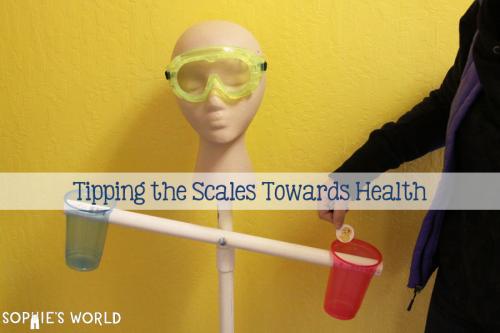
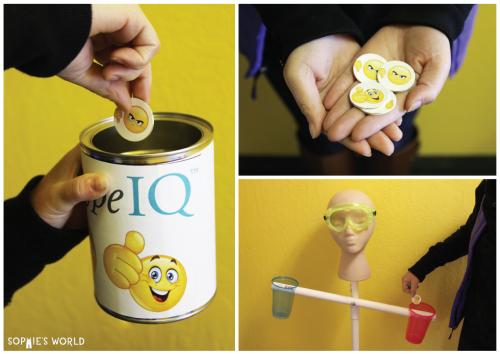
To illustrate this point I’ve had my warehouse manager Steve create oversized, PVC scales of justice. I’ll be breaking the kids into teams - and having them personalize their scale/client by giving it a head, facial features, hair, accessories and a name. From there they will play a game. Each member will pull a token from a bag. The bag will have 20 tokens, 10 each - marked either with a smiley emoji for “good genes” or a frowny emoji for “bad genes”. Our young “clinicians” will place their token in the corresponding cup “hand” of their client. At the end of the game an assessment will be made - is our client at risk? Or are they healthy?
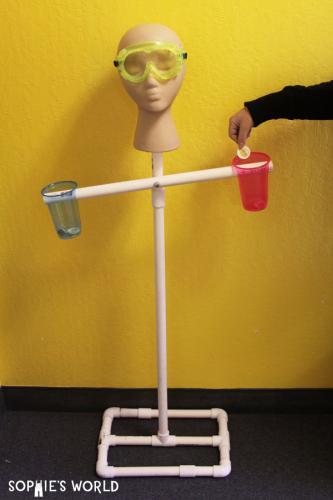
Next, the kids will enter into group discussion with their team leader as to what options they might have to help their client either get or remain healthy. It will then become a balancing act - try adding some new tokens - nutrition, exercise, meditation, rest, even laughter. Still not enough? Then we get into things like medication, chemotherapy, and surgery. Each of these tokens has it’s own designated weight, However, the kids won’t know ahead of time what has more or less weight. It becomes an experiment in finding the right balance.
Since the event begins three hours from when I am posting this, I won’t be able to share the photos of the children’s “clients” until tomorrow. But I will definitely do so, along with whether or not this concept worked. Just like the kids, I’m heading into uncharted territory. But I’m very excited to see what the diagnosis is.
